GeM benefits for MSEs and startups
GeM MSE benefits come from two sources. The first is national policy: the Public Procurement Policy for Micro and Small Enterprises (MSEs) Order, 2012, which sets a 25% buying target and price preferences for central government buyers. The second is GeM's own rules, which exempt eligible MSEs and recognised startups from bid security and carry the MSE price band into reverse auctions. Together they make government buying one of the more accessible markets for small manufacturers and service providers.
The scale is large. According to the PIB release of 7 August 2026, 12.25 lakh MSEs are registered on GeM and they have fulfilled orders worth more than ₹9.07 lakh crore, or 45.6% of everything bought on the platform since 2016.
Who counts as an MSE for public procurement
For the policy, an MSE is a micro or small enterprise registered on the Udyam registration portal. The Development Commissioner (MSME)'s FAQ on the policy, dated 25 March 2022, says MSEs registered under Udyam are eligible from 1 July 2020; the earlier Udyog Aadhaar Memorandum stayed valid only until 31 March 2022. The Udyam portal says registration is free of cost, paperless and based on self-declaration, and that no fees are to be paid to anyone.
On GeM, MSE status is verified through Udyam. The Vendor Validation Policy v5.0 lists MSME status as one of the profile details checked online. When you register on Udyam you can also opt to link your enterprise with GeM, according to the FAQ, and a PIB release of 16 June 2021 describes how GeM imports the details of consenting MSEs to create their seller profiles.
Medium enterprises are not covered by the procurement policy. Its benefits are for micro and small enterprises only. The size limits were raised from 1 April 2025, according to the Udyam portal:
| Size | Investment up to | Turnover up to |
|---|---|---|
| Micro | ₹2.5 crore | ₹10 crore |
| Small | ₹25 crore | ₹100 crore |
An enterprise must stay within both limits. A firm with turnover over ₹100 crore is a medium or large enterprise and cannot claim MSE benefits in GeM bids.
The Public Procurement Policy for MSEs Order, 2012
The policy took effect on 1 April 2012 and became mandatory from 1 April 2015. It is notified under the MSMED Act, 2006, and its current form follows the gazette notification S.O. 5670(E) of 8 November 2018.
| Target | Share of annual procurement |
|---|---|
| From all MSEs | At least 25% |
| From MSEs owned by SC or ST entrepreneurs | 4%, within the 25% |
| From MSEs owned by women entrepreneurs | 3%, within the 25% |
The targets apply to each ministry's, department's or CPSU's total annual procurement, not to each tender. If SC/ST- or women-owned MSEs do not take part or cannot meet the tender terms and the L1 price, the sub-targets are met from other MSEs.
In addition, 358 items are reserved for exclusive purchase from MSEs. A review committee chaired by the Secretary, Ministry of MSME, keeps that list under review.
The policy applies to central government ministries, departments and CPSUs. It does not apply to state government ministries, departments or PSUs, though all states have been asked to frame similar policies. Progress is monitored on the MSME Sambandh portal.
Purchase preference: L1 + 15%
When the lowest bid (L1) in a tender is from a firm that is not an MSE, any MSE that quoted within L1 + 15% may bring its price down to L1 and supply part of the order. Such MSEs together can supply up to 25% of the total tender value, shared in proportion to the tendered quantity if there are several. If the item cannot be split, the MSE within the band may be given the full supply.
On GeM, the General Terms and Conditions, version 1.29, also apply the band to reverse auctions: an eligible MSE quoting within 15% of a non-MSE L1 is allowed into the auction even if the elimination rule would exclude it. After the RA, the buyer awards keeping the MSE policy in view. For example, if the non-MSE L1 quotes ₹1,00,000, an MSE quoting up to ₹1,15,000 can be offered the chance to match L1.
EMD exemption on GeM bids
Bid security, or earnest money deposit (EMD), applies only to GeM bids with an estimated value over ₹5 lakh. MSEs are exempt if they meet all of these conditions under the GTC:
- hold valid Udyam registration
- manufacture the offered product or provide the offered service; for bunch bids evaluated on total value, the primary product or service
- give specific confirmation and claim the exemption when submitting the bid
- have their credentials validated online through Udyam and through documents uploaded with the bid
A buyer cannot take EMD from an exempt MSE through additional terms; such clauses are void. There is one exception. State government departments, state autonomous bodies, state local bodies, state PSUs and cooperatives may limit the exemption to MSEs from their own state, or seek EMD from MSEs, by stating so in the bid's terms.
Other relaxations: tender fee, turnover and experience
The policy FAQ lists further benefits for MSEs in central procurement:
- tender sets free of cost
- exemption from earnest money
- relaxation in prior turnover and prior experience criteria, subject to quality and technical specifications
Central buyers may still insist on prior experience in sensitive purchases, such as items related to public safety, health or critical security operations.
One benefit MSEs do not get: there is no exemption from security deposit or performance bank guarantee. On GeM, winning bidders must furnish performance security of up to 5% of contract value whatever their size.
Who does not get the benefits
| Excluded | Reason given in the policy FAQ |
|---|---|
| Traders, distributors and sole agents | The policy covers goods produced and services rendered by MSEs |
| Retail and wholesale traders on Udyam | Their Udyam registration is for priority sector lending only |
| Works contracts | Works are outside the policy |
| Joint ventures and consortiums | Udyam has no provision to register them |
| Medium enterprises | The policy covers micro and small enterprises only |
On GeM, the EMD exemption likewise requires the MSE to manufacture the offered product or provide the service, so an MSE reselling another firm's product does not qualify for that product.
Startups: DPIIT recognition, EMD exemption, Startup Runway
Startups recognised by the Department for Promotion of Industry and Internal Trade (DPIIT) are exempt from bid security on GeM. Under the GTC, they must hold a valid Startup Recognition Certificate, upload it when bidding and claiming the exemption, and make sure their turnover in any financial year has not gone beyond the limits in the certificate or the DPIIT scheme. Recognition is applied for through Startup India. GeM verifies startup status against the DPIIT database.
To register as a startup on GeM, add your DPIIT certificate number and the mobile number linked to it in the seller profile.
Startup Runway is GeM's storefront for innovative startup products. It was launched on 15 November 2019, according to the June 2021 PIB release, and features products under globally recognised startup sub-sectors. The PIB release of 7 August 2026 reports that 42,242 startups have secured orders worth over ₹65,633 crore on GeM.
Women, SC/ST, SHG, artisan and weaver sellers
Several groups have extra support:
- Women entrepreneurs. 3% of central procurement is earmarked for women-owned MSEs. GeM's Womaniya storefront showcases them. More than 2.24 lakh women-led MSEs have fulfilled over 50 lakh orders worth more than ₹99,147 crore, according to PIB.
- SC and ST entrepreneurs. 4% is earmarked for MSEs owned by SC or ST entrepreneurs. A proprietary MSE qualifies if the proprietor is SC or ST; a partnership or private company qualifies if SC/ST partners or promoters hold at least 51%. The status must be declared in the Udyam registration. The National SC/ST Hub, run by NSIC, gives handholding support.
- Self-help groups. The Saras Ajeevika storefront features SHG products.
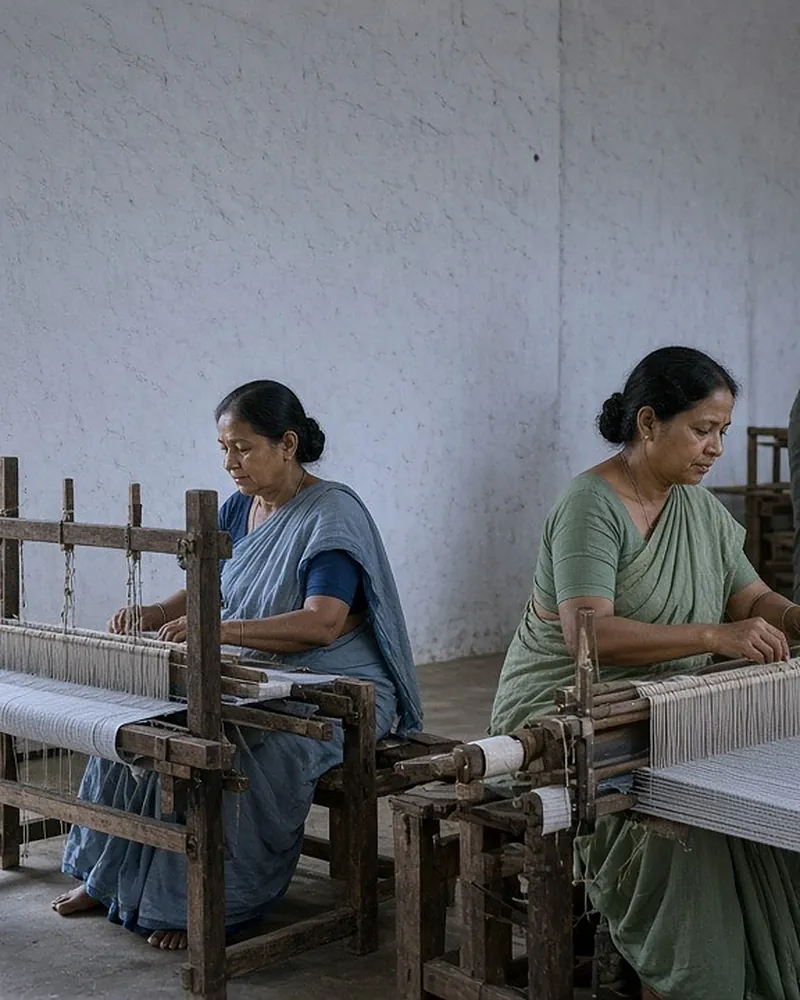
- Artisans and weavers. India Handloom and India Handicraft storefronts, and the One District One Product (ODOP) pages, list their products.
Grievances about the policy
If a central buyer denies you a benefit you are entitled to under the policy, the Ministry of MSME's grievance cell is the CHAMPION portal. The FAQ says the matter may also be referred to the procuring agency concerned. The policy itself has no provision for action against a procuring agency, so the grievance route is a request for correction, not a penalty process.
For problems on GeM itself, such as an EMD exemption not being recognised in a bid, raise a ticket with GeM. A ticket that stays unresolved can be escalated after 3 days.
Frequently asked questions
Are MSEs exempt from EMD on GeM?
Yes, if they have valid Udyam registration and manufacture the offered product or provide the service. State bodies may limit or remove the exemption through the bid's terms.
What is the L1 + 15% rule?
An MSE quoting within 15% of a non-MSE L1 can match the L1 price and supply up to 25% of the tender value.
Do traders get MSE benefits on GeM?
No. Traders, distributors and sole agents are outside the policy.
Are MSEs exempt from performance security?
No. The policy gives no exemption from security deposit or performance bank guarantee.
Does the policy apply to state government purchases?
No. It applies to central ministries, departments and CPSUs. States may have their own policies.
Is Udyam registration free?
Yes. The official Udyam portal says registration is free of cost and no fees are to be paid to anyone.
Do startups need Udyam for EMD exemption?
No. DPIIT-recognised startups are exempt on the strength of their recognition certificate.